
3 hr
Istanbul: Guided Topkapi Palace & Harem Tour with Entry
- Entry ticket
- Mobile voucher
- Valid same day
- Free cancellation
Topkapi Palace Harem Tickets — Combined Entry & Guided Access
Two hundred rooms behind one gate, one quiet morning to walk them.
Compare fares, pick the fit — all bookings are mobile-voucher and eligible for free cancellation where shown.
3 hr
3 hr
3 hr 30 min
Worth it for most first-time visitors
The 2,750 TRY combined ticket bundles the palace, the Harem, and Hagia Irene, so topkapi palace harem tickets are less about a premium add-on than about what the Harem section uniquely delivers. Inside, you get room after room of Iznik tilework, the domed Imperial Hall where the sultan received family, and the private apartments the outer courtyards never show. Skip the Harem and you skip the one wing that explains how the dynasty actually lived. For the price of a decent Sultanahmet dinner, the value math favors going in, especially against other Istanbul landmarks charging comparable rates for far less depth. It pays off for first-timers, history-minded travelers, and anyone doing topkapi palace harem tickets tours who wants more than courtyards. It underdelivers for a rushed traveler treating it as a checkbox stop between other sights.
Bottom line: For any first-timer, the Harem is the part of the topkapi palace harem tickets tour that justifies the combined fee.
Hand-picked experiences loved by thousands of travelers
3.5 hours
Free Cancellation
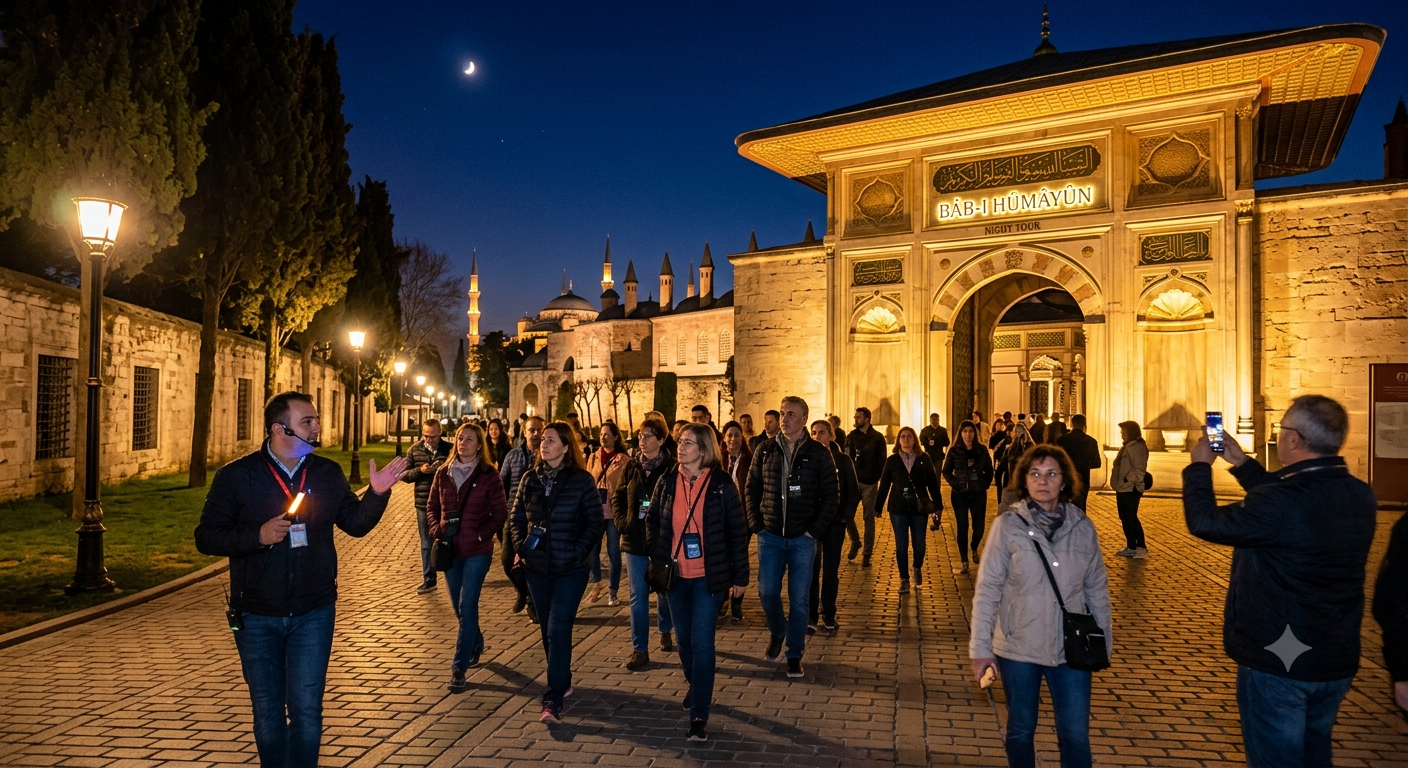
Experience the imperial majesty of the Ottoman sultans during an exclusive, quiet evening visit to Topkapi Palace.
2 - 3 hours
Free Cancellation
Uncover Ottoman secrets and Byzantine wonders on this guided exploration of Istanbul's most iconic historical landmarks.
4 hours
Free Cancellation
Explore Istanbul’s iconic Blue Mosque and the opulent Topkapi Palace on an expert-led, 4-hour walking tour.
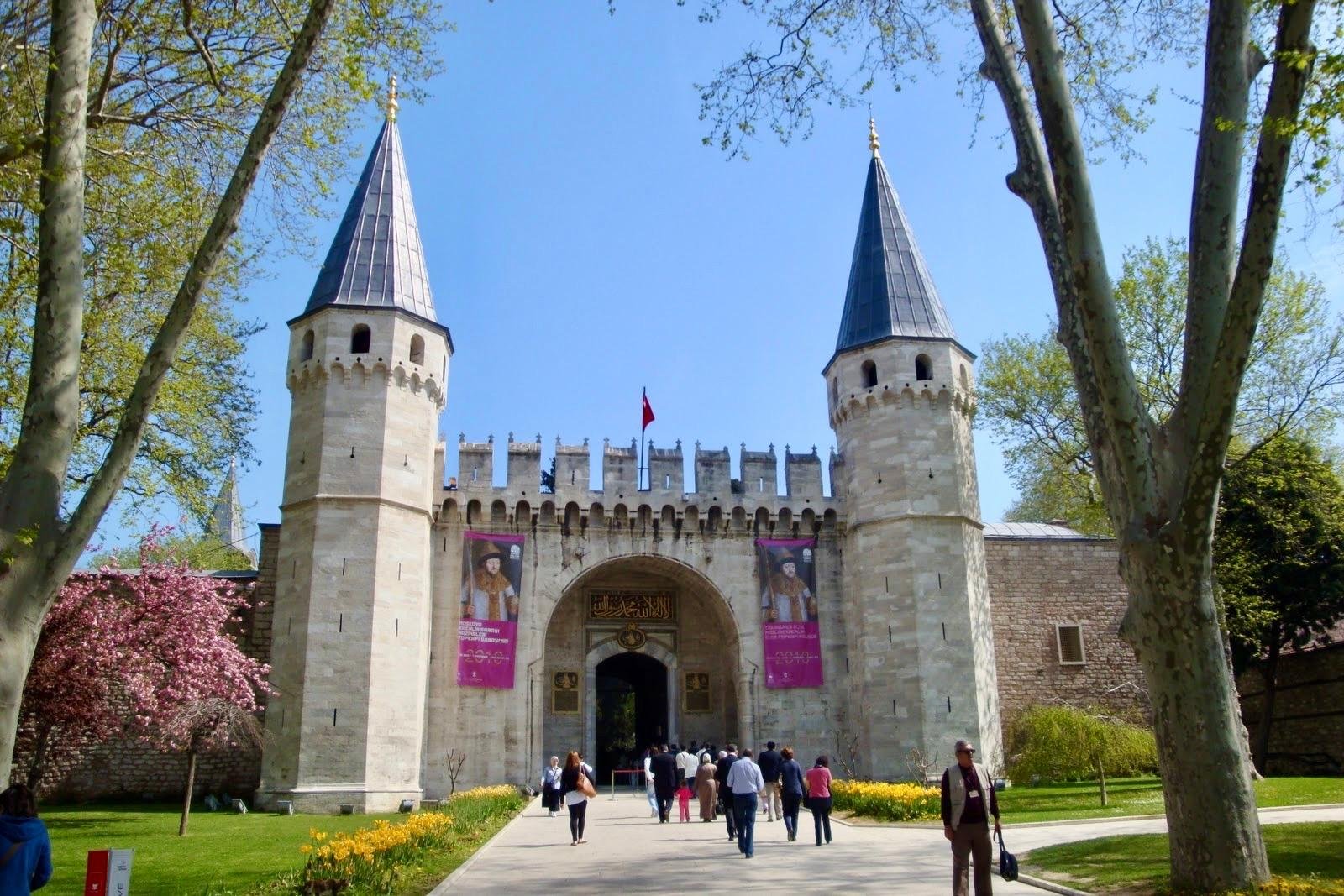
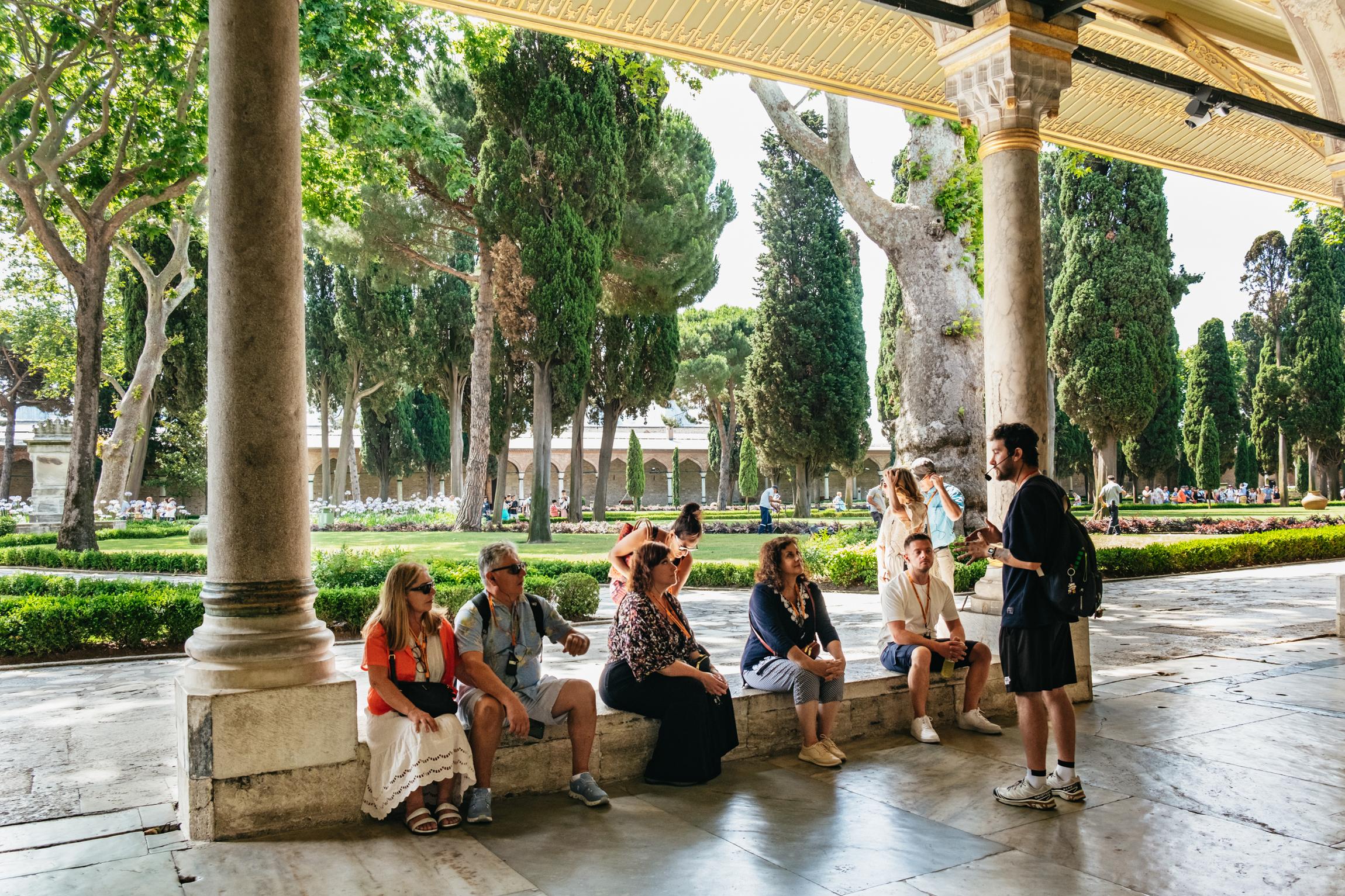
You enter through the Imperial Gate on Cankurtaran and cross the first court before the ticket line thickens. Aim for the 09:00 opening; reach the Harem before the tour groups arrive around 10:00, and the tiled corridors are briefly yours. Your topkapi palace harem tickets clear the combined route, so you move from the outer courts toward the guarded entrance without doubling back. You pass the quarters of the Black Eunuchs first, their dormitory lined in blue-and-white İznik panels, then step into the Courtyard of the Valide Sultan, the pivot of the whole household. You pause under the dome of the Imperial Hall, where the sultan received his family, and trace the coral-red tiles of Murad III's privy chamber with your eyes rather than your fingers. Mid-morning, you follow the Golden Road, the narrow paved spine that links the private apartments to the wider palace. Light drops through high shuttered windows onto worn stone. You slow at the twin-domed apartments of the crown princes, then loop back toward the courtyards where fountains once covered the sound of voices. By late morning the ruins of quiet are gone as coach groups fill the passages, so you time your exit toward the treasury and Hagia Irene while your combined entry still holds. You leave through the same court you entered, having walked a household that most of the empire never saw. A topkapi sarayi harem bileti buys that hour of near-solitude — the site's rarest currency.
All the details about your upcoming adventure in one place
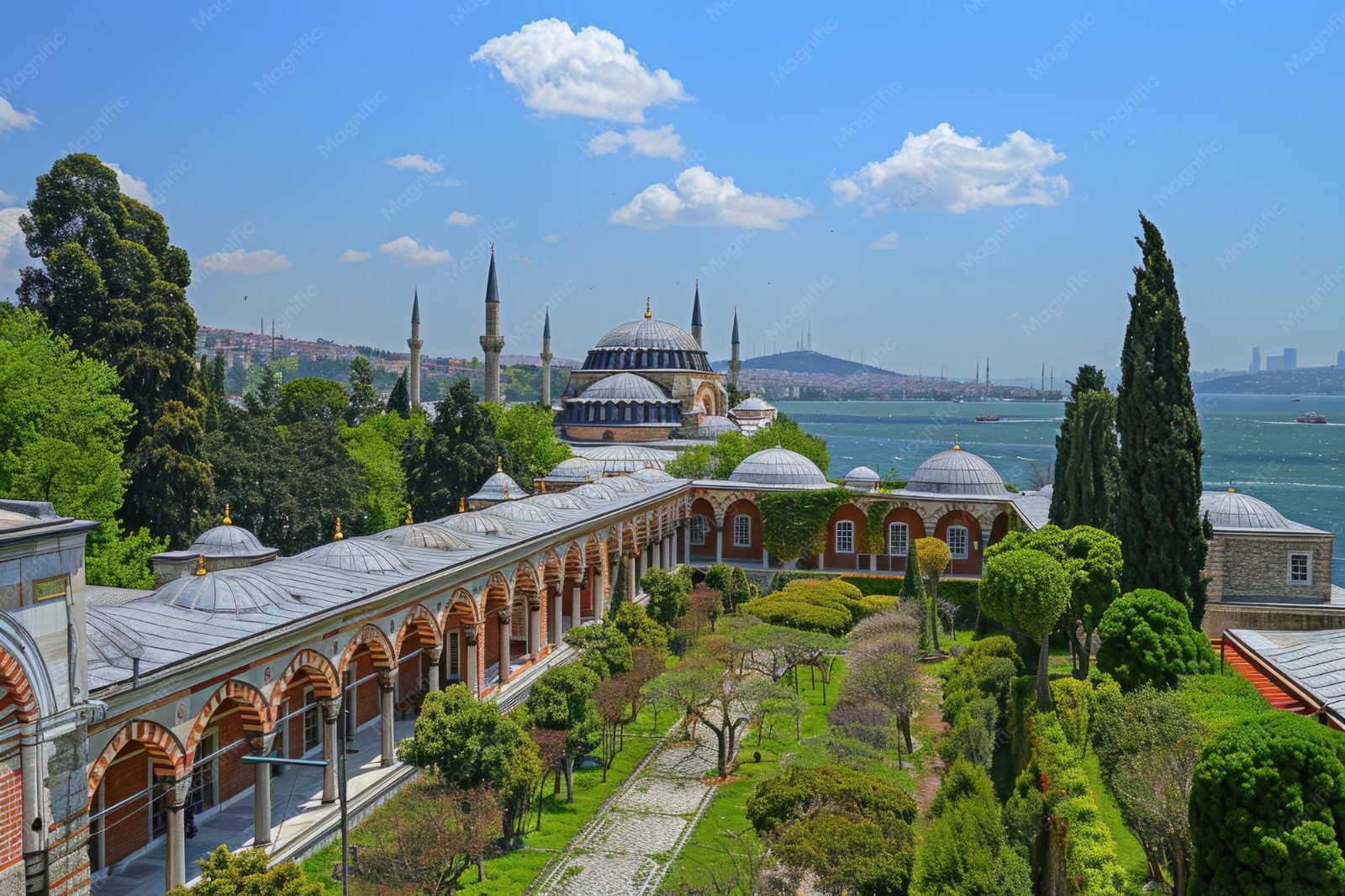
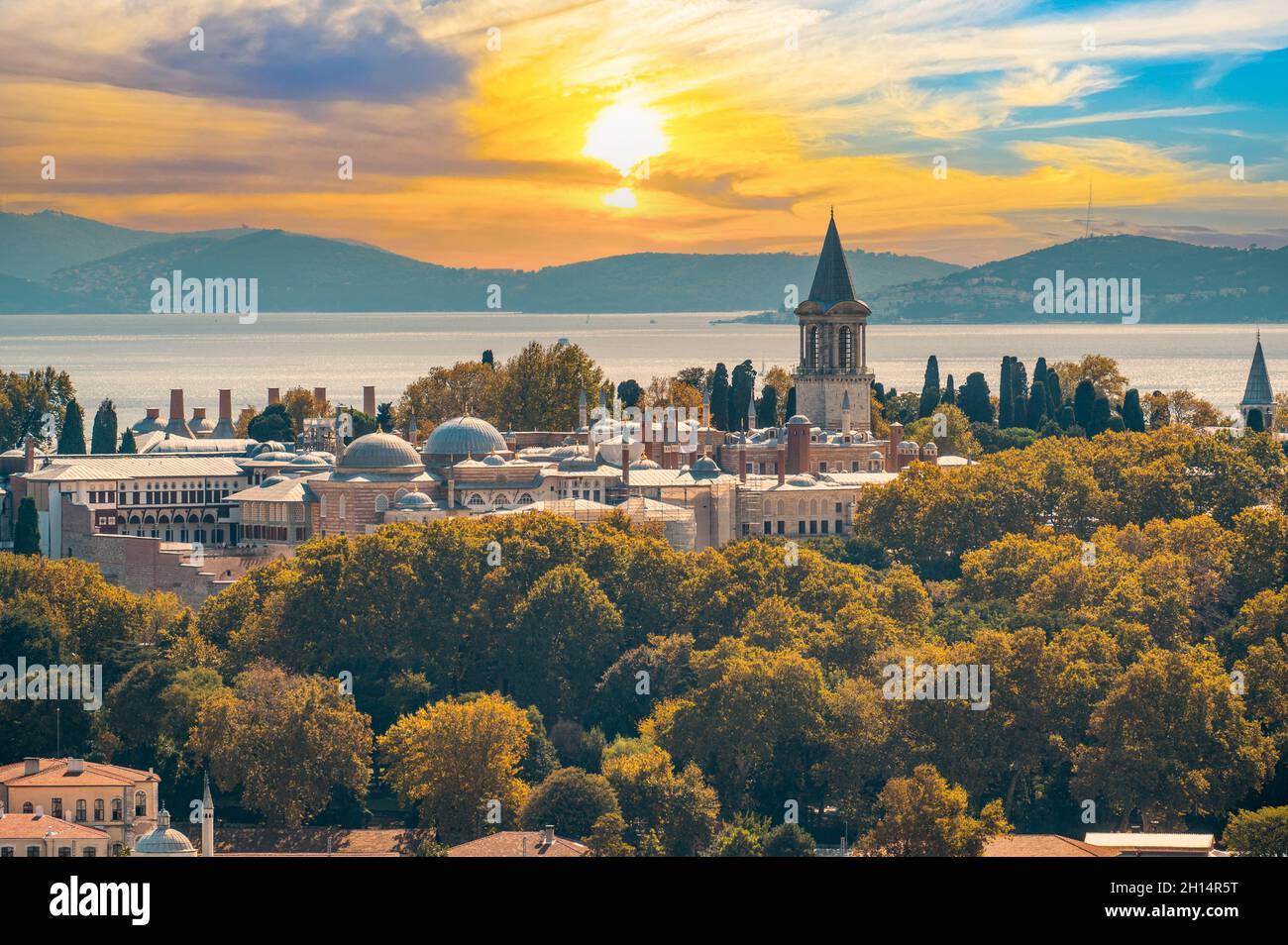
Set on Seraglio Point above the Bosphorus, the palace served as the Ottoman court's administrative heart, and topkapi palace harem tickets open the private residential quarters where the sultan's family once lived. Guided topkapi palace harem tickets tours lead you through tiled courtyards, the Imperial Council chambers, and the Gate of Felicity that separated public ceremony from inner life. Whether you prefer a self-paced Istanbul palace tour or an escorted route, the site rewards curiosity about Ottoman heritage.
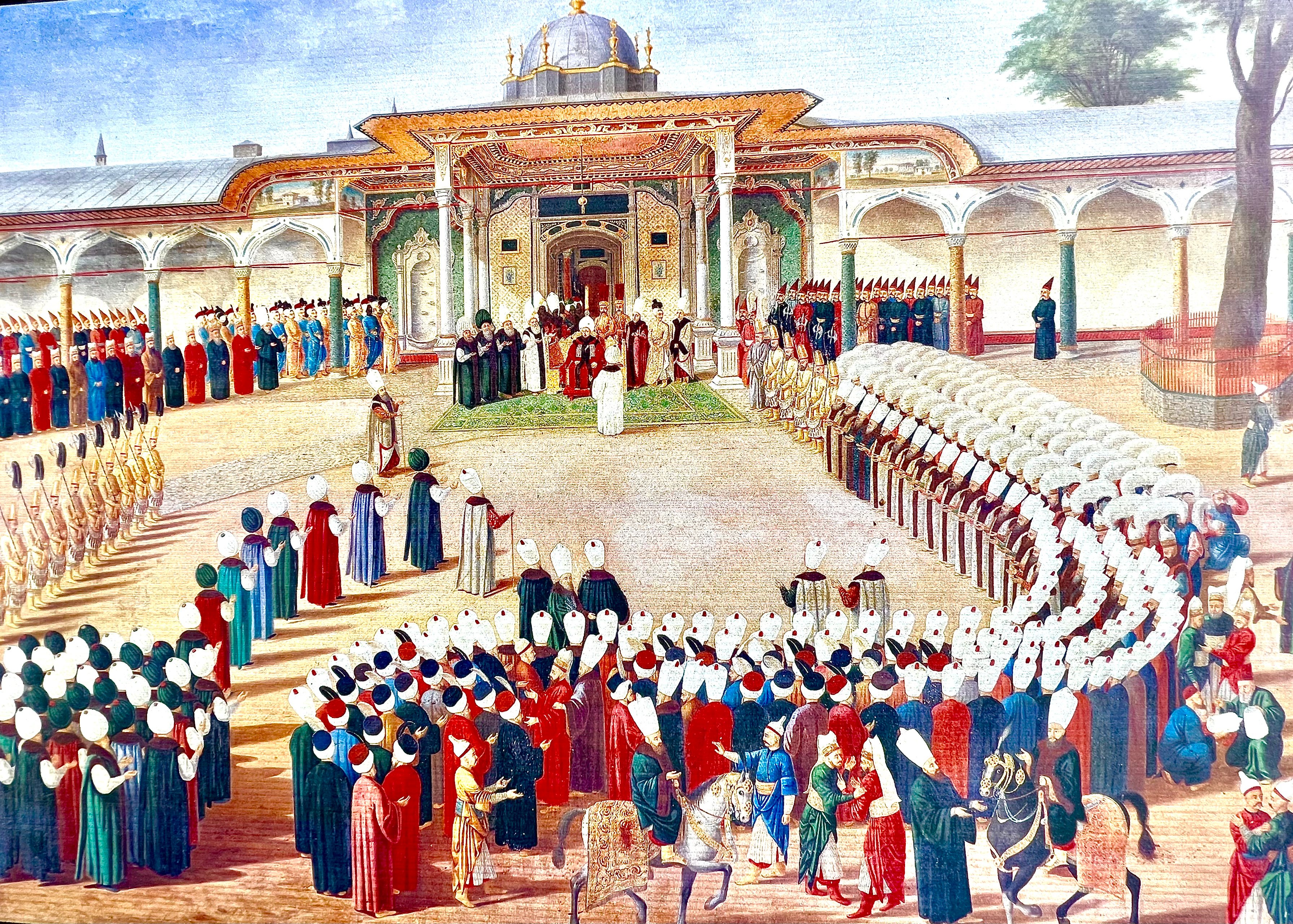
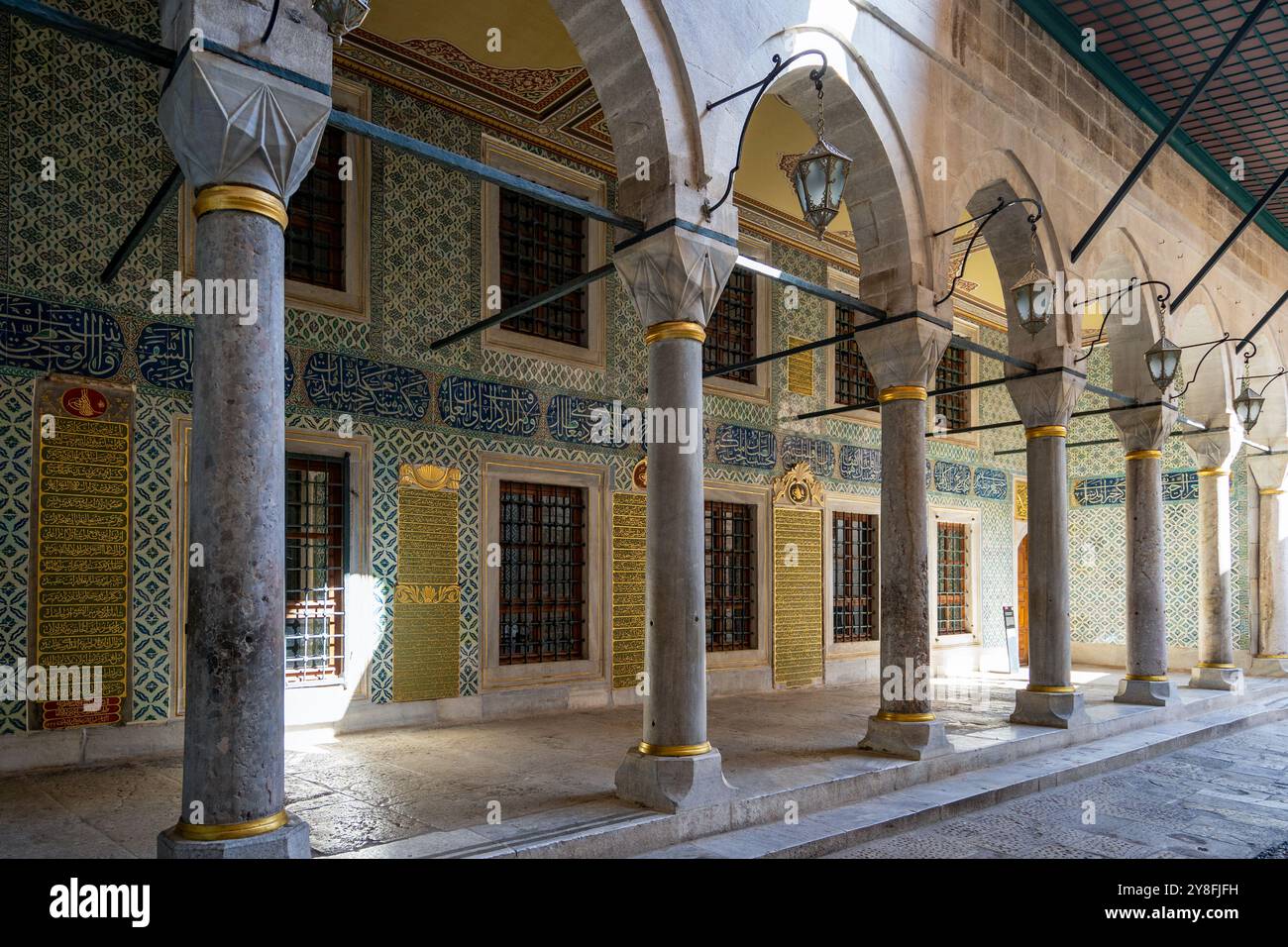
The Harem at Topkapi was not a single hall but a labyrinth of more than 300 rooms, courtyards and passages built and rebuilt across four centuries. It was the private world of the Ottoman dynasty, walled off from the ceremonial courts that greeted ambassadors and janissaries. Anyone weighing topkapi palace harem tickets is buying a way into that inner geography — the sealed household of a state that ruled from the Bosphorus for over 600 years. Mehmed II laid the first stones after 1459, siting the palace on Seraglio Point where the Golden Horn meets the Sea of Marmara. Successive sultans added tiled chambers, a domed imperial hall and the private apartments of Murad III, whose walls carry İznik tilework in cobalt, turquoise and coral red. The Harem sat at the heart of this expansion, governed by its own hierarchy of the valide sultan, the consorts and the corps of eunuchs who controlled its guarded doors. What survives today is a museum of surfaces. The İznik panels, the gilded muqarnas vaults, the fountains that masked conversation, the shuttered windows angled toward interior courtyards rather than the city — each detail was engineered for seclusion. The Golden Road, a narrow paved corridor, connected the private quarters to the wider palace, and along it moved the intimate traffic of the court. Ceramics scholars now read the tile sequences as a chronology, dating rooms by the shifting palette and the emergence of the famous coral pigment that later faded from Ottoman kilns. A visitor holding topkapi palace harem tickets tour access walks through this record of taste and power in the order the builders intended. The wider Topkapi Palace Museum, of which the Harem is the guarded core, remained the sultans' principal residence until the mid-nineteenth century, when the court moved to Dolmabahçe on the European shore. In 1924, by decree of the young republic, the complex opened as a public museum, and the Harem — long the most private ground in the empire — became one of Istanbul's most studied interiors. Reservations for a topkapi sarayi harem bileti route the modern crowd through what was once forbidden to almost everyone. Today the Harem anchors any serious itinerary among Istanbul landmarks, sitting steps from Hagia Irene and the treasury pavilions within the same walls. Its significance is less about scale than about intimacy: it preserves the domestic machinery of an imperial house — kitchens, baths, schoolrooms and sleeping chambers — that most palaces erase. Conservators continue to stabilise the tilework and timber, and the combined route that pairs the palace, the Harem and Hagia Irene keeps these three registers of Ottoman life legible together. Securing a skip-the-line topkapi palace entry is, in the end, a way of reading a closed world made open.
The Harem was not a single hall but a labyrinth of more than 300 rooms, sealed off from the ceremonial courts that greeted ambassadors.
Recommended time
2-3 hours
Most people using topkapi palace harem tickets spend 30 to 60 minutes inside the Harem's tiled corridors and chambers, folded into a broader 2-3 hour palace visit that also covers the courtyards, Treasury, and terraces. Add 30 minutes if you're pausing for photos in the Privy Chamber or lingering over the Golden Horn views; subtract time only if you're skipping the Harem entirely, which shortens things to a brisker loop. Queue reality is simple: the Second Courtyard gate to the Harem stays manageable until roughly 10:00, then narrow corridors slow to a shuffle as tour groups stack up. A skip-the-line Topkapi Palace tour or timed online entry helps most in that 10:00-13:00 window.
Crowd levels through the day
Mehmed II began building Topkapi Palace after 1459, yet the earliest sultans kept their women in the Old Palace at Beyazit. The Harem's rise to the heart of imperial life came under Suleiman the Magnificent. His consort Hurrem Sultan, the former slave Roxelana, moved into the New Palace in the 1530s. Her presence broke tradition. From that decision grew the labyrinth of over three hundred rooms that visitors seeking topkapi palace harem tickets still trace today. The architect Mimar Sinan expanded the quarters through the mid-16th century, adding tiled chambers clad in Iznik faience. Power concentrated in the Valide Sultan, the sultan's mother, who governed the Harem's hierarchy. Below her ranked the consorts, concubines, and the girls trained in music and calligraphy. Guarding them all were the Black Eunuchs, led by the Chief Eunuch, or Kizlar Agasi, whose office became one of the most influential in the empire. This closed world drew concubines, princes, and administrators into a single web of authority beside the palace's other imperial landmarks. The late 16th and early 17th centuries brought what historians call the Sultanate of Women. Nurbanu, Safiye, and Kosem Sultan wielded regency power from within these walls. Kosem was strangled in the Harem in 1651 during a factional struggle, one of many near-disasters that marked its politics. The Cage, or Kafes, replaced the old practice of fratricide after 1603, confining princes to gilded rooms where several later emerged unprepared to rule. Fires in 1574 and 1665 forced repeated reconstruction, layering Baroque details over Ottoman classical stone. When the empire dissolved, the residents left. Topkapi Palace became a museum on April 3, 1924, by order of the new republic. The Harem section opened to visitors only decades later, its private corridors made public. Guided topkapi palace harem tickets tours now follow routes the eunuchs once patrolled. Compared to skip-the-line Istanbul landmarks elsewhere, the appeal of topkapi palace harem tickets tickets lies in this intimacy of scale. A single topkapi palace harem tickets tour reveals the Golden Road, the courtyards of the concubines, and the apartments where imperial mothers decided the fate of a dynasty.
Hurrem Sultan moved into the New Palace, shifting the Harem to the heart of imperial life.
Mimar Sinan expanded the quarters with Iznik-tiled chambers under Suleiman.
The Cage system replaced fratricide, confining princes within the Harem.
Kosem Sultan was strangled inside the Harem during a factional struggle.
A major fire forced reconstruction, adding later Baroque detailing.
Topkapi Palace became a museum by republican decree on April 3.
The Harem section opened to the public along the eunuchs' old corridors.
Sofa-i Hümâyûn, the marble terrace of the Fourth Courtyard, opens onto a near 180-degree sweep of the Bosphorus, the Golden Horn and the Asian shore. Stand at the terrace edge near the İftariye Kiosk and frame the water between the pavilion domes. Space is wide, so even a crowded afternoon leaves room to compose the shot.
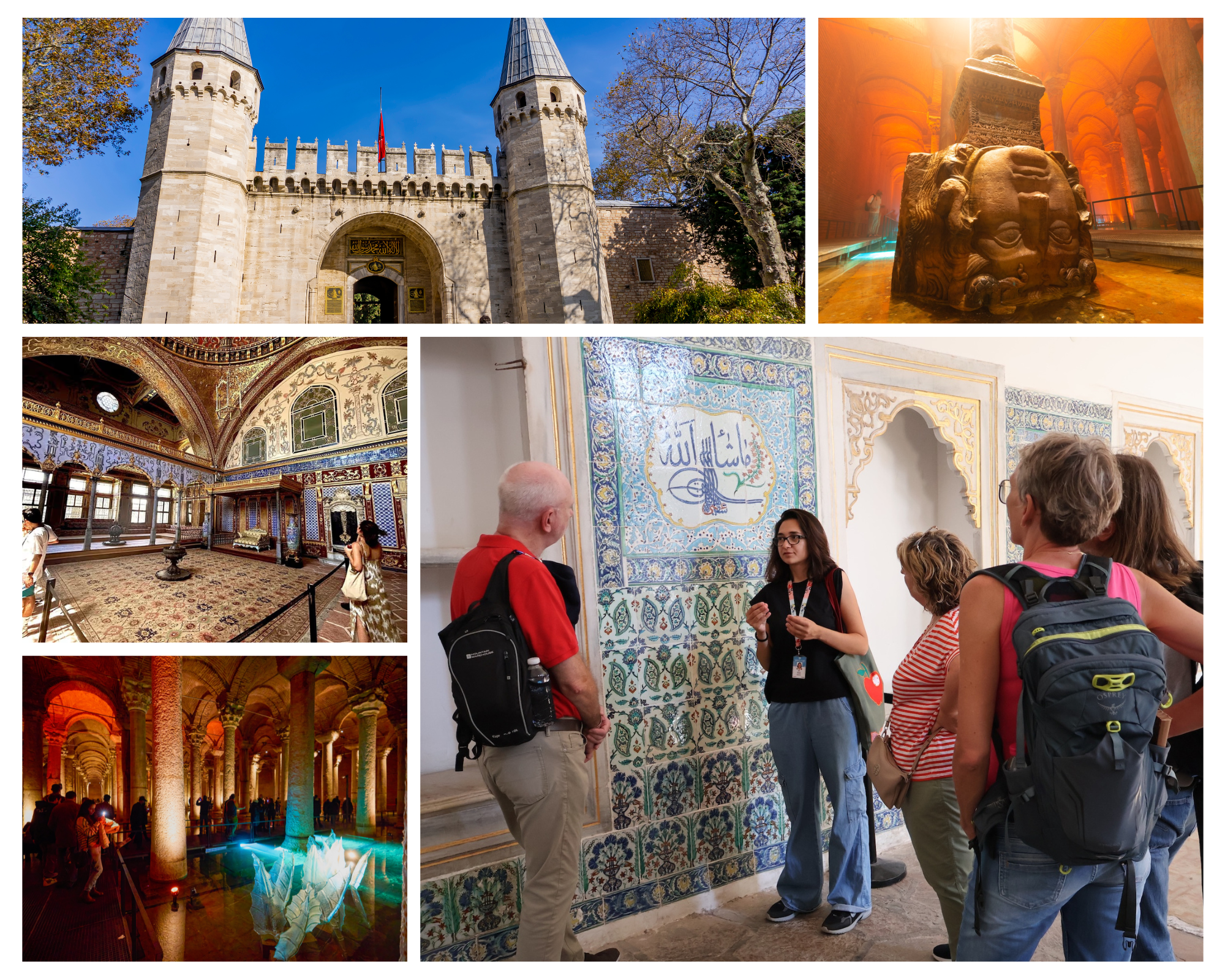
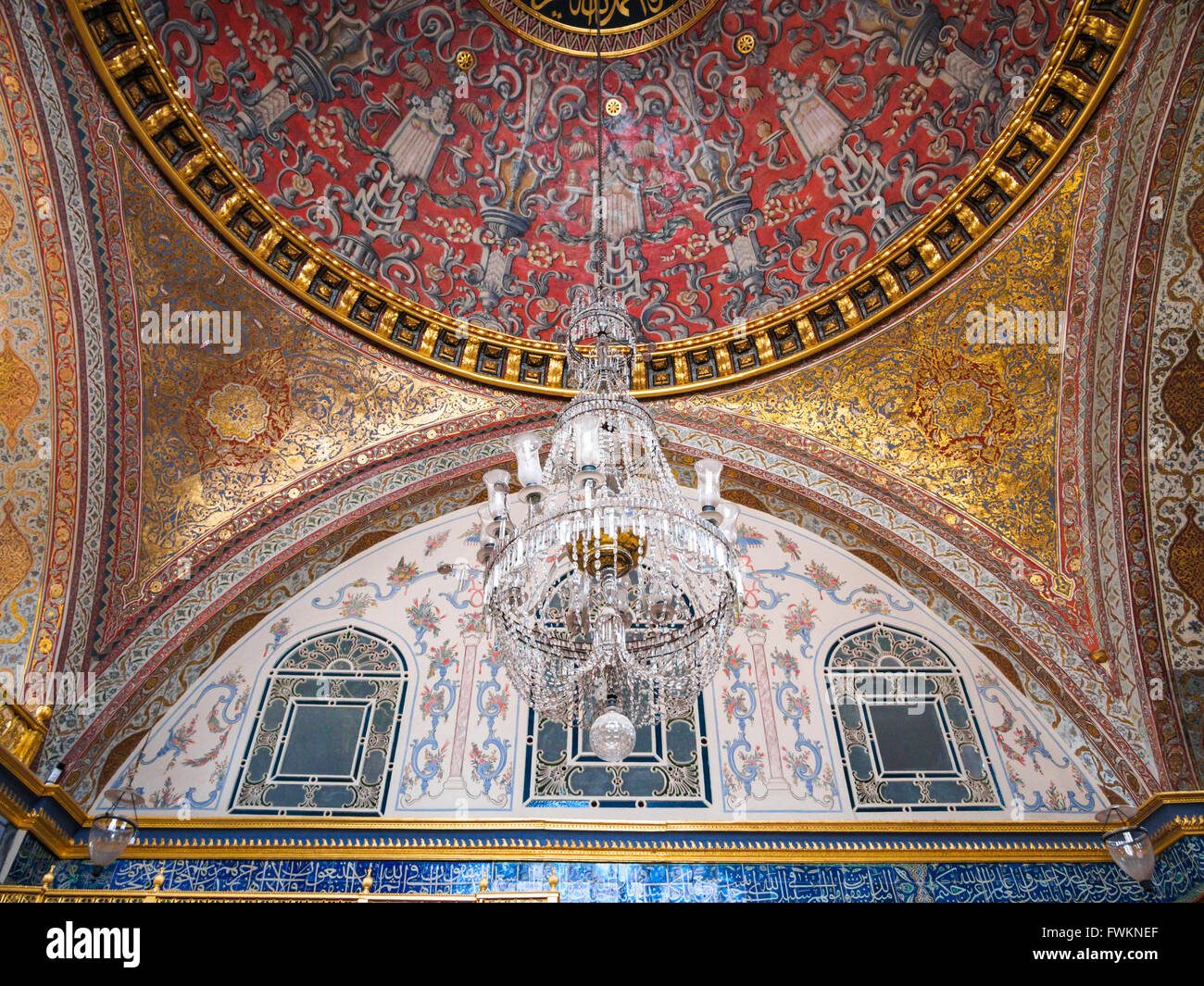
The Hünkâr Sofası, the largest domed chamber in the Harem, is where visitors booking topkapi palace harem tickets find the richest concentration of Iznik tile panels in cobalt blue, turquoise and coral red. Shoot upward into the gilded stalactite dome from the center of the room, or angle low to catch the tiled walls in one frame. Photography here relies on the room's natural window light.
Widely regarded as the finest interior in the Harem, this room pairs floor-to-ceiling 16th-century Iznik tile panels with a bronze fireplace and a central marble fountain. Position yourself opposite the fireplace to capture the tilework, dome and fountain together in a single symmetrical shot. The doorway itself makes a strong frame for a portrait-style angle.
Şadırvanlı Sofa marks the entrance corridor beyond the Black Eunuchs' Ward, reached after the Horse Ramp and Curtain Gate. Its 17th-century Kütahya and Iznik tiled walls form a long, evenly lit corridor that works well for a straight-on hallway shot toward the next courtyard. It's also a useful reference point on any topkapi palace harem tickets tour for orienting the rest of the route.
The Queen Mother's private apartments show off tile panels with cypress trees, birds and calligraphic inscriptions, distinct from the Imperial Hall's grander scale. Stand centered in the main salon to capture the tiled walls and painted ceiling together. These rooms sit along a quieter branch of the Harem route, often free of the tour groups pointed to by the descriptive tag Istanbul palace tour.
Booking topkapi palace harem tickets with kids in tow works best if you treat the Harem as a separate, slower leg of the visit rather than an extension of the open courtyards. Its narrow corridors and low interactivity mean the experience varies a lot by age, so plan the pacing accordingly.
Strollers roll fine through the palace's outer courtyards, but the Harem's steps, thresholds, and narrow doorways make wheeled access impractical, so plan to leave the stroller at a designated parking spot before entering.
A soft-structured baby carrier is the better call for the Harem section itself, letting you navigate tight passageways and stairs hands-free while keeping a toddler close.
Older children and teens with some grounding in history tend to engage with the Harem's stories of sultans and their families, while toddlers and preschoolers often find the quiet, corridor-heavy rooms tiring rather than a highlight of their istanbul landmarks tour.
Basic toilets and baby-changing rooms exist within the wider palace grounds, so locate them on the site map before you commit to the Harem's longer, amenity-free stretch.
Because the Harem route is one-directional through many small rooms, break the visit into short stretches and pause in connecting courtyards to let kids reset before the next chamber.
The Harem's covered halls make it a reasonable wet-weather fallback compared to the palace's open courtyards, though the same narrow, crowded passageways apply regardless of weather.
Real experiences from real travelers
We bought our topkapi palace harem tickets at the kiosk inside the first courtyard and the queue moved faster than expected. The tiled rooms were cooler than the open courtyards, a relief in the June heat, and the light through the lattice windows in late morning was lovely. Give yourself an unhurried hour just for this wing.
The cobalt Iznik panels in the Harem are the real reason to come, and a good istanbul topkapi palace tour guide pointed out details I would have walked straight past. We arrived just after opening and had the corridor near the Privy Chamber almost to ourselves. Bring a light layer, the shaded rooms can feel cool even in spring.
I went on a drizzly weekday morning and the Harem was calm, footsteps echoing on the marble. The skip-the-line topkapi palace option saved me a long wait at the main gate. A few of the smaller chambers were roped off for restoration, which was the only slight letdown.
Booking topkapi palace harem tickets tours ahead meant we glided past the main crowd and stepped straight into the shaded tiled halls. The domed Imperial Hall with its gilded ceiling was the highlight, glowing warmly in the afternoon light. Comfortable shoes matter, the floors are old stone and uneven in places.
Even among all the istanbul landmarks, the Harem felt like a hidden world folded inside the palace. Our istanbul topkapi palace tour flowed logically from the courtyards into the private quarters, and the storytelling made the empty rooms come alive. Late afternoon light through the stained glass was worth lingering for.
The main palace is grand but the Harem is where I lost track of time. Having our topkapi palace harem tickets tour sorted in advance meant no fumbling at the ticket booth in the cold February wind. The Courtyard of the Favourites with its Bosphorus view caught the low winter sun beautifully.
Even in late January the tiled corridors drew a steady stream of visitors, so patience helps near the narrow passages. The topkapi palace harem tickets tickets we bought online were scanned without fuss at the separate Harem entrance. I would allow more time than you think, the detail rewards slow looking.
We timed our visit for the last entry slot and the autumn afternoon light poured through the windows onto the Iznik walls. The self-guided route through the Harem was easy to follow, and the quieter crowd made photography a pleasure. One of the calmer corners we found among all the busy istanbul landmarks.
The Harem is a warren of courtyards and chambers, each with its own tilework and mood. A good topkapi palace guided tour helped us make sense of who lived where and why the layout twists the way it does. Go early on a clear morning, the marble and turquoise practically hum in the sun.
I made the mistake of arriving at noon and the tiled rooms were shoulder to shoulder in the summer heat. The architecture is remarkable, though the flow through the Harem bottlenecks in the narrower halls. Come early or late and the experience would be far better.
Join thousands of happy travelers who have discovered this incredible experience
Book Your Experience Now